

Travel the World, Leave a Lighter Footprint
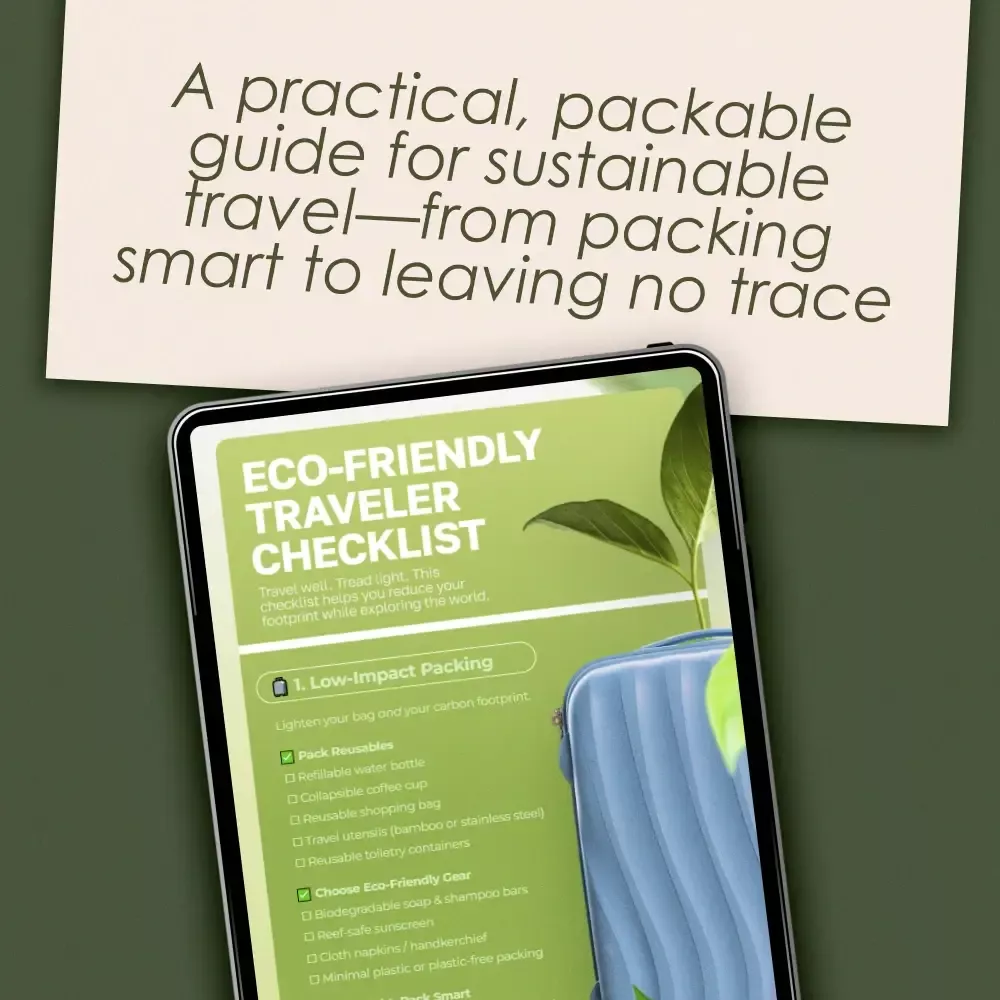
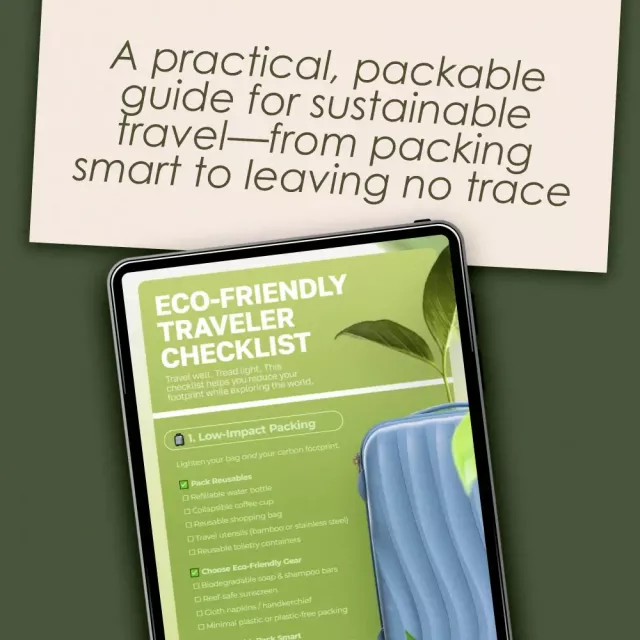
If you love exploring new places but hate the thought of harming the planet, the Eco-Friendly Traveler Checklist is your must-have travel companion. This digital download is packed with practical, easy-to-follow steps that make it simple to reduce waste, choose greener transportation, support local communities, and respect cultures—all while still having an amazing trip. Designed for travelers who want to feel confident they’re making responsible choices, it’s the perfect blend of planning tool and sustainable inspiration.
What’s Inside the Eco-Friendly Traveler Checklist?
- Low-impact packing guide with reusable essentials and eco-friendly gear ideas
- Transportation & carbon offset tips for flights, trains, buses, and rentals
- Sustainable lodging checklist for booking and being a conscious guest
- Food & local living tips for eating well and supporting local economies
- Leave No Trace & cultural respect section to protect nature and honor traditions
- Eco travel app recommendations for carbon tracking, green stays, and ethical dining
- Final pre-trip checklist to confirm you’re ready to travel greener
Benefits You’ll Gain
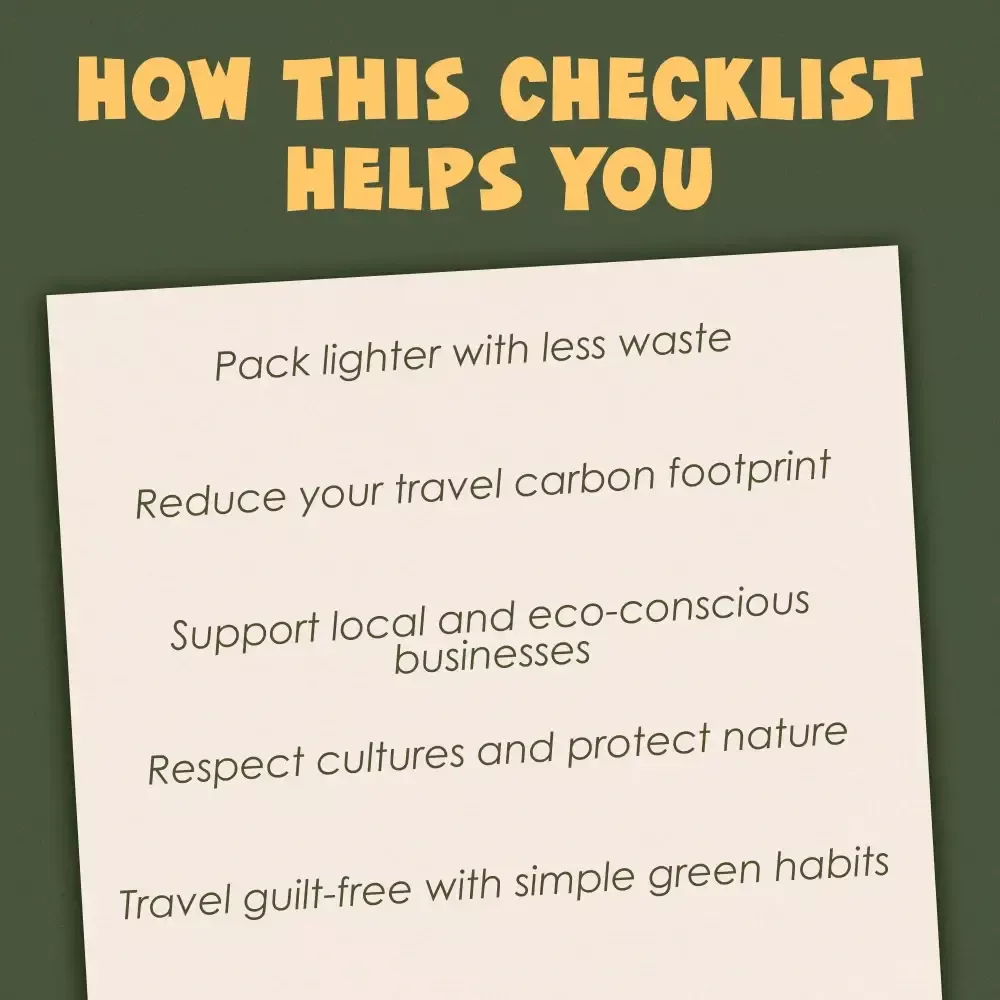
- Pack lighter and reduce single-use waste
- Cut your carbon footprint while traveling
- Support local communities and small businesses
- Make eco-conscious choices without overthinking
- Enjoy travel that’s respectful and rewarding
Who Is This For?
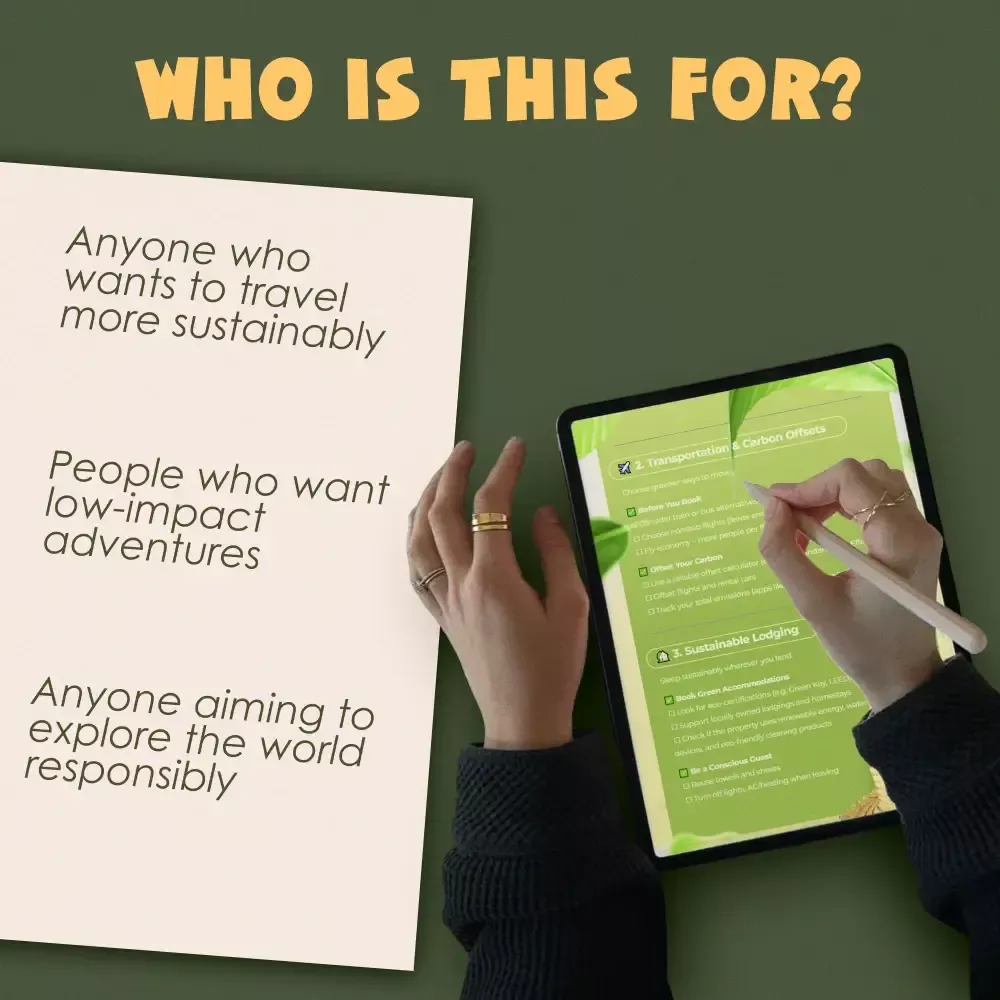
Perfect for frequent flyers, backpackers, digital nomads, eco-tourists, and anyone who wants to explore responsibly. Whether you’re planning a weekend getaway or a month-long adventure, this checklist helps you make meaningful, planet-friendly decisions every step of the way.
Why This Checklist is Different
Unlike generic travel lists, the Eco-Friendly Traveler Checklist is built entirely around sustainability—covering packing, transport, lodging, dining, cultural respect, and technology. It’s not just about remembering what to bring; it’s about traveling with purpose and pride.
Start Traveling Greener Today
Download the Eco-Friendly Traveler Checklist now and take the guesswork out of sustainable travel. Small changes add up—your journey toward a healthier planet starts here.
Order cancellation
All orders can be cancelled until they are shipped. If your order has been paid and you need to make a change or cancel an order, you must contact us within 12 hours. Once the packaging and shipping process has started, it can no longer be cancelled.
Refunds
Your satisfaction is our #1 priority. Therefore, you can request a refund or reshipment for ordered products if:
- If you did not receive the product within the guaranteed time( 45 days not including 2-5 day processing) you can request a refund or a reshipment.
- If you received the wrong item you can request a refund or a reshipment.
- If you do not want the product you’ve received you may request a refund but you must return the item at your expense and the item must be unused.
We do not issue the refund if:
- Your order did not arrive due to factors within your control (i.e. providing the wrong shipping address)
- Your order did not arrive due to exceptional circumstances outside the control of worthyofferingsnest.shop (i.e. not cleared by customs, delayed by a natural disaster).
- Other exceptional circumstances outside the control of https://worthyofferingsnest.shop
*You can submit refund requests within 15 days after the guaranteed period for delivery (45 days) has expired. You can do it by sending a message on Contact Us page
If you are approved for a refund, then your refund will be processed, and a credit will automatically be applied to your credit card or original method of payment, within 14 days.
Exchanges
If for any reason you would like to exchange your product, perhaps for a different size in clothing. You must contact us first and we will guide you through the steps.
Please do not send your purchase back to us unless we authorise you to do so.
Instant download
Your purchase will be available to download once payment is confirmed.
Instant download items don’t accept returns, exchanges or cancellations. Please contact us if you have any problems







I didn’t realize how many small choices could make such a big difference until I went through this guide. The suggestions for cutting down on my carbon footprint while traveling are spot-on and actually easy to put into practice. I especially liked the section on choosing smarter transportation options—whether it’s comparing flights, opting for trains, buses, or even considering greener rentals. The advice feels both practical and encouraging, without being overwhelming. It’s also helped me think more mindfully about the bigger picture of sustainable travel, not just the packing side of things. Now I feel like I can see the world with a lighter impact and a clearer conscience—and that makes the journey even more enjoyable 😊
I love supporting local communities when I travel. This checklist has amazing tips for eating well and boosting local economies. Makes me feel good knowing my travels have a positive impact.
Worth reading 💯
If you're into respectful tourism like me, you'll appreciate the Leave No Trace and cultural respect section of this digital download – helps protect nature and honor traditions wherever we go.
As someone who cares deeply about both travel and sustainability, I’ve found this checklist to be a genuinely useful tool. It’s thoughtfully designed, covering all the key aspects of eco-conscious travel in a clear, practical way. Instead of overwhelming you with information, it breaks things down so you can easily take action—whether you're a seasoned traveler or just starting to think about reducing your environmental impact. The packing section is particularly helpful. Often, we overlook how much single-use waste we generate on the road, but this checklist highlights simple swaps and reusable essentials that make a big difference. Thanks to it, I’ve been able to travel more lightly and more mindfully, knowing that my choices are helping to reduce unnecessary waste. Transportation is another area where this checklist shines. It doesn’t just mention the obvious eco-friendly alternatives—it offers realistic suggestions for making greener choices, even when you're navigating unfamiliar cities or countries. It made me more aware of the impact of my travel habits and gave me better options to consider when planning my routes. One of the most impactful parts for me was the guidance on sustainable lodging and dining. Instead of defaulting to chain hotels or tourist-heavy spots, the checklist encourages seeking out businesses that are locally owned and environmentally responsible. It’s a reminder that travel can—and should—contribute positively to the places we visit, not just take from them. Another aspect I really appreciated is the emphasis on cultural respect. There’s a dedicated section that gently but effectively encourages travelers to be more mindful of the communities they engage with. It’s not preachy, but it does make you think about your role as a guest in someone else’s home, which I find incredibly valuable. Overall, this checklist has helped me travel with greater purpose. It’s not just about reducing harm—it’s about enriching the travel experience itself by making more conscious choices. If you're looking to be a more responsible traveler without feeling overwhelmed, this guide is a great place to start
What surprised me most were the app recommendations in this guide - they help with everything from carbon tracking to finding green stays and ethical dining spots! So handy 📱👍
Last but not least, there’s a final pre-trip check-up ensuring you’re ready to embark on your journey sustainably. Downloading this made me realize small changes add up towards creating a healthier planet 🌎❤️
👍👍👍
This digital guide is a must for any traveler looking to reduce their carbon footprint. The transportation tips are super practical and easy to follow 👣✈️
The sustainable lodging checklist in this guide helped me be a conscious guest during my last trip. Felt good knowing I was making responsible choices 🏨🌿
Very helpful
I appreciate the cultural respect section of this travel guide - it ensures that we protect nature and honor traditions wherever we go 💫🌸
I’m honestly surprised at how quickly this little guide started making a difference in my travel planning. Instead of stressing over what to bring, I now have a clear checklist that keeps me organized and intentional. I really appreciate how it encourages packing lighter while also cutting down on unnecessary waste—saying goodbye to single-use items feels like a big step in the right direction. The suggestions are simple but impactful, and I can already see how they’ll make my trips smoother and more eco-conscious. It feels good to know I’m traveling smarter while also doing my part for the planet! 😊
As a frequent traveler, I found this checklist extremely helpful! It's not just about packing, it's about making conscious decisions that benefit our planet. The low-impact packing guide was my favorite part - so many reusable essentials and eco-friendly gear ideas!
❤️
I've always wanted to support local communities when I travel, but never knew how. This checklist makes it simple by providing great suggestions on where to eat and shop.
Making eco-conscious choices used to feel overwhelming, but not anymore with this guide. It's like having a personal assistant helping you make responsible decisions every step of the way.
highly recommended 👌
The app recommendations included here are top-notch! Found some really useful ones for tracking my carbon footprint and finding green stays.
The final pre-trip checklist is such a thoughtful addition—it gives me confidence knowing I'm ready to embark on greener journeys 🌍 Can't wait for my next trip!
Traveling feels so much more intentional now that I have this checklist by my side. It takes the guesswork out of packing while gently reminding me to make choices that are kinder to the planet. I’ve noticed how much easier it is to avoid unnecessary waste, and there’s a real sense of satisfaction in knowing those small steps add up. What surprised me most were the thoughtful tips on supporting local communities—something I hadn’t always considered before, but now feels like an essential part of traveling responsibly. It’s refreshing to have a guide that balances practical advice with meaningful impact, making every trip feel both simpler and more rewarding.
🔥🔥🔥🔥
I found the sustainable lodging section really useful when planning my recent trip. Being able to book with confidence that I was choosing eco-friendly accommodations made all the difference.
As a backpacker, this checklist is perfect! From green transport options to respecting cultures while exploring new places—it’s got everything covered.
The food and local living tips have been amazing for eating well on my travels AND supporting economies at the same time—win-win situation here!
Ok
The app recommendations were an unexpected bonus—I now have some great tools for tracking carbon emissions and finding ethical dining spots on-the-go.
Packing for trips used to feel overwhelming, but this checklist turned it into something simple and stress-free. I love how practical and easy to follow it is—everything feels clear and manageable without overcomplicating the process. It’s also helped me stay mindful about what I truly need, which made my last trip feel lighter and so much more organized. Best of all, I noticed how much less waste I created along the way, which gave me peace of mind while traveling. It’s such a relief to have a guide that makes sustainable choices feel effortless and rewarding. 🌍
👍
Easy to follow
I'm all about supporting local economies when traveling, and this guide makes it simple and straightforward 👌🏼
The cultural respect section was an eye-opener for me - made me realize how important it is to honor traditions while exploring new places.
not bad
Last minute pre-trip checks can be stressful but thanks to this checklist, I was confident that I had everything covered for a greener journey.
I didn’t realize how much smoother my backpacking trip could be until I tried this checklist. It kept me focused on the essentials, which meant my pack was lighter and way easier to manage on the road. Beyond that, it encouraged me to be more mindful about waste—I noticed a huge difference in how little trash I created compared to past trips. One of the best parts was the reminder to support local businesses along the way, which added so much more authenticity and connection to my travels. It’s such a simple resource, but it made the whole experience more organized, sustainable, and enjoyable. 👍
I love how easy the eco-friendly traveler checklist makes sustainable travel. No more overthinking about whether I'm making the right choices.
❤️❤️❤️❤️
This guide has completely transformed how I plan my trips. The low-impact packing guide is especially useful - goodbye single-use items!
As a digital nomad, this checklist helps me make meaningful decisions in every country I visit. From food to lodging, everything's covered.
Clear guidance
The pre-trip checklist is awesome! It ensures you're ready to travel greener before you leave home ✅ Can't wait for my next adventure!
This checklist made my travel so much easier! I loved the low-impact packing guide, it helped me reduce waste and pack lighter. Also, the tips for choosing greener transportation were a big help. 🌍
Planning my last trip felt so much easier with this guide by my side. Instead of second-guessing my choices, I had clear steps that helped me stay organized and mindful. The section on sustainable lodging was especially eye-opening—it gave me the confidence to choose places that were not only eco-friendly but also rooted in the local community. I loved knowing that my stay supported businesses that genuinely care about the environment and the people who live there. It’s reassuring to have a resource that turns good intentions into real, practical actions while traveling.
🔥
Absolutely love how detailed yet simple this is! The food & local living tips are fantastic - they've really helped me support local economies while eating well on my trips.
Let’s talk about this digital download that’s really reshaped the way I plan and experience my backpacking trips. As someone who tries to keep sustainability front and center in everyday life, having a resource like this has been genuinely helpful 🌍 Not too long ago, trying to travel in an eco-friendly way felt like trying to solve a puzzle with missing pieces. It could be confusing, time-consuming, and honestly a bit discouraging. But with this checklist, that sense of overwhelm has been replaced with clarity and structure. Everything is broken down into clear, manageable steps—from planning and packing to choosing transportation, food, and accommodations. What makes this tool stand out is how practical and well-organized it is. It doesn’t just skim the surface; it dives deep into every part of the travel process, without feeling too heavy or complicated. Whether you’re a beginner to sustainable travel or have been at it for a while, there’s something valuable here. You don’t feel like you’re being lectured—you just feel supported. Take accommodations, for example. The guide doesn’t just suggest “stay local” and leave it at that. It provides guidance on how to identify lodging that balances comfort with environmental responsibility. That’s the kind of detail that helps you make informed choices without compromising the quality of your trip. Food is another big one. We've all been in that situation where we want to eat responsibly, but also enjoy ourselves and support local businesses. This checklist helps you weigh those options in a thoughtful, simple way. It’s less about restrictions and more about awareness and better decision-making. One of the things I didn’t expect—but really appreciated—is how this checklist doesn’t just tell you what to do. It also gives you a sense of motivation and intention for your journey. It reminds you that every choice you make, no matter how small, can contribute to more responsible travel. So if eco-conscious travel is important to you—or even if you're just curious about how to travel more mindfully—this digital guide is definitely worth checking out. It’s practical, approachable, and helps take the stress out of doing the right thing 🌱✈️
The Leave No Trace section is great - now I feel confident that I'm respecting nature and cultural traditions wherever I go 😊
The app recommendations were spot-on! They've been instrumental in tracking carbon emissions, finding green stays, and dining ethically during my travels.
super informative
Love this checklist! It's so handy for my frequent travels, and it helps me to pack lighter while reducing waste. I've never felt more organized and eco-conscious on my trips 😊
I never realized how much of a difference a simple guide could make in shaping the way I travel. This resource feels like a must-have for anyone who wants their adventures to be both enjoyable and environmentally responsible. The low-impact packing suggestions were practical and easy to follow, helping me stay organized without overpacking. What really stood out were the carbon offset tips—they gave me a new perspective on how small choices add up to meaningful change. It’s reassuring to know I can still explore the world while being more thoughtful about the footprint I leave behind.
👍👍👍
The sustainable lodging checklist in this download is amazing! Now I can book with confidence knowing I'm making conscious choices that don't harm our planet 🌍
As an eco-tourist, respecting cultures and leaving no trace are important to me. This guide makes it easy—it’s not just about what to bring but also traveling with purpose.
Great tips 🔥
Small changes do add up! Downloading this was my first step towards greener travel—and what a rewarding journey it's been so far!
Love this checklist! It's made my travels so much lighter and helped me cut down on single-use waste. Plus, it's super easy to follow - no overthinking needed!
It’s rare to find a travel resource that feels both practical and inspiring, but this one truly does. For anyone trying to travel more consciously, it’s like having a thoughtful companion guiding each step of the journey. The sustainable lodging suggestions were especially helpful when I was booking places to stay—I felt more confident that my choices were supporting businesses with real values behind them. On top of that, it reminded me to think beyond convenience and consider the impact my travels have on the communities I visit. Now I can head out on trips with genuine peace of mind, knowing I’m exploring responsibly and leaving a lighter footprint.
❤️
The food and local living section was brilliant! Loved the emphasis on supporting local economies while traveling – such an important aspect often overlooked in other guides.
As a digital nomad, reducing my carbon footprint is very important to me. This checklist offers practical transportation and carbon offset tips that have really helped me make greener decisions on the move.
well written
Final pre-trip checklist? Super useful! Made sure I had all bases covered before setting off on my trip. Also loved the app recommendations for tracking carbon emissions, finding green stays, etc. A must-have tool for anyone wanting to travel responsibly!
Love this checklist! It's made traveling so much easier and I feel good knowing I'm reducing my carbon footprint. The low-impact packing guide is a game-changer – no more single-use waste for me!
I didn’t expect a simple digital guide to change so much about the way I approach traveling, but this one truly did. It’s packed with thoughtful details that make planning feel both easier and more meaningful. The eco-friendly gear suggestions gave me practical swaps I could use right away, and the green lodging recommendations made booking accommodations so much more intentional. What I really appreciate is how it goes beyond just packing and planning—it also highlights ways to support local communities along the journey, which adds a whole new layer of connection and purpose to my trips. Traveling feels lighter, more mindful, and so much more rewarding now. 😊
ok
A must-have for every responsible traveler! The sustainable lodging checklist helped me make better choices when booking accommodations. Also, the pre-trip final checklist ensures that you're ready to explore greener 🌍
As a frequent flyer, this has been invaluable in helping me cut down my carbon emissions and support small businesses at my destinations - all without overthinking!
The cultural respect section of this guide is simply amazing! Now I can honor traditions wherever I go and ensure that nature remains untouched by leaving no trace behind 👏👏
🔥🔥🔥🔥
Love this checklist! Makes eco-friendly travel a breeze. The low-impact packing guide is brilliant - I've significantly reduced my single-use waste on trips. 🌍
This digital download has been so helpful for me as a frequent flyer, it's easy to follow and makes being green while traveling less of a chore.
Finding accommodations that match my values used to feel overwhelming, but this guide made it so much simpler. The sustainable lodging checklist is a real game-changer—it takes the guesswork out of booking and gives me confidence that I’m making choices that truly matter. I love that it not only helps me select eco-friendly places to stay but also encourages me to think about how I show up as a guest. It’s a thoughtful reminder that being a responsible traveler isn’t just about where you go, but how you engage while you’re there. Now, I can enjoy my trips knowing I’m supporting businesses that care about the planet and the community.
Packed with value
I appreciate the transportation tips in this guide, they've helped me cut down my carbon footprint when flying or using other modes of transport. A must-have for any traveler!
As someone who loves supporting local businesses when travelling, the food and local living tips are golden. They help you eat well and support small economies at the same time 👏
👍
Last but not least, the final pre-trip checklist confirms all your green choices before setting off – no more second guessing if you're ready to travel greener ✈️🌱
What a fantastic tool for eco-conscious travelers! It's not just about packing, but also helping you make mindful choices in transport, lodging, and dining. The carbon offset tips are particularly useful - I've cut my footprint significantly on recent trips.
life changing!!!
Planning my recent weekend getaway felt completely different thanks to this checklist. Instead of juggling a hundred little details, I had clear guidance that kept things simple while still being mindful of the planet. The low-impact packing ideas were practical and helped me avoid bringing unnecessary items, while the sustainable lodging tips gave me confidence in choosing places that reflect my values. What I loved most was how effortless it all felt—I didn’t have to overthink every choice, yet I still knew I was traveling in a more eco-conscious way. It’s such a relief to enjoy a trip that feels both easy and responsible at the same time.
The Eco Traveler Checklist has transformed how I travel. It’s an easy-to-follow guide that makes reducing waste simple while still enjoying your trip fully. A must-have for any responsible traveler.
I’ve always wanted to be more environmentally conscious when traveling but didn’t know where to start... until now! This checklist is full of practical steps that have made it easy for me to respect cultures and protect nature during my adventures.
Not bad
Finally found something that helps with green travel beyond just remembering what to bring along. With this checklist, every decision becomes meaningful towards sustainability 👏 Love it!
Traveling lighter and reducing waste has never been easier with this checklist. It's the perfect tool for eco-conscious explorers, offering reusable essentials and gear ideas that are kind to our planet 🌍
❤️❤️❤️
One of the things I appreciate most about this guide is how it connects travel with a sense of purpose. Instead of just focusing on where to go, it encourages making choices that genuinely matter along the way. The recommendations for sustainable lodging and dining were not only easy to follow but also made me feel more connected to the places I visited. Supporting local businesses felt rewarding, and it added an authentic layer to my trip that I might have missed otherwise. It’s reassuring to know my travel choices can have a positive impact while still being enjoyable and stress-free. 👏
The food tips in this guide were amazing! Not only did they help me eat well on my travels, but also support local economies - win-win situation!
Must read 🔥
If you're interested in eco-tourism, you’ll know that it can sometimes feel like a balancing act. On one hand, there’s the excitement of exploring new places, and on the other, a real concern about the impact your travels might have on the planet. That’s where this checklist becomes genuinely useful—it helps take the guesswork out of making environmentally responsible choices. The checklist is well-organized and thorough, covering everything from sustainable packing suggestions to low-waste gear recommendations. It also offers practical advice on minimizing your carbon footprint through different modes of transport, whether you're flying, taking the train, or cycling. Even when it comes to meals, it doesn’t just tell you to eat local—it guides you toward ethical dining choices that align with sustainable practices, helping you enjoy your food with more awareness and less guilt. What I appreciate most is that this isn’t just a list of dos and don’ts. It also serves as a reminder that small, intentional choices can add up over time. Rather than making sustainability feel like a burden, it encourages a more thoughtful mindset—one where being a responsible traveler is part of the adventure, not an obstacle to it. One unexpected benefit was how it made me slow down and reflect more on how I plan my trips. I started noticing areas where I could easily make better choices, without sacrificing comfort or enjoyment. It’s not about perfection, but about doing what you can—and this guide helps you find those opportunities in ways that feel achievable. Whether you're heading off for a short weekend break or organizing a longer journey abroad, this checklist provides a solid foundation for sustainable travel. It’s helped me feel more confident in the choices I make and reminded me that being mindful doesn’t have to mean making things harder. Instead, it adds a sense of purpose to the experience—one that makes travel even more meaningful
Eco travel apps? Yes please! The recommendations provided helped me track carbon emissions and find ethical dining spots easily 📱💚
The final pre-trip checklist was the cherry on top of an already great resource. Made sure I didn't forget anything important before setting off on my green adventure!
Such a practical and easy guide! I've always loved traveling, but was concerned about my carbon footprint. This checklist helped me make greener choices without overthinking. Now I can enjoy my trips guilt-free 😊
🔥
Really useful for planning a greener trip. I appreciated the local support and cultural tips. I do think a few visuals or infographics would make it even more engaging. All in all, I’m very satisfied and would recommend it!
Living as a digital nomad means I’m always looking for ways to make travel smoother and more sustainable, and this guide has been a game-changer. It’s packed with thoughtful suggestions that fit easily into my lifestyle without feeling overwhelming. The waste-reducing tips are practical and easy to follow, while the focus on supporting local economies makes every destination feel more meaningful. I especially appreciated the eco app recommendations—they’ve given me new tools to actually track my progress and stay motivated along the way. It feels empowering to know I can keep exploring the world while also making choices that matter.
Highly recommended
I used this checklist on my last trip, cut down so much single-use waste by packing lighter with reusable essentials suggested in the guide! Also loved the section on cultural respect 👍
Traveling greener couldn't be simpler thanks to this digital download! Managed to offset some of my carbon emissions during transport using their tips - feels good knowing you're making a difference.
👍👍👍👍
Love this checklist! It's made packing so much easier. I've reduced my waste and feel good knowing I'm making a difference 🌎
Used it for my latest trip, the carbon offset tips were invaluable. Cut down on my footprint while still seeing all the sights!
The sustainable lodging checklist is a gem. Makes finding eco-friendly places to stay stress-free.
What really stood out to me about this guide is how it goes beyond just packing tips and truly reshapes the way you experience travel. I loved how it highlighted the importance of supporting local economies—it encouraged me to be more intentional with where I dined and shopped, which led to some of the most memorable meals and conversations of my trip. The recommendations made it easy to connect with local businesses that I might have overlooked otherwise, and that added so much authenticity to the journey. Traveling this way felt more rewarding, knowing that every choice was helping to uplift the community I was visiting. 😊
Super informative 🔥
The app recommendations are fantastic for keeping track of your green efforts on-the-go 👍
The final pre-trip checklist makes sure you're ready to travel greener - no second guessing or forgetting important steps!
Just downloaded this eco-travel guide and it's already making a huge difference! The low-impact packing tips are so helpful, I've cut down on single-use waste massively. 🌍
ok
Truly the best tool for anyone wanting to travel greener. It covers everything from transportation to lodging, all with sustainability in mind. No more overthinking my choices!
This checklist is perfect for digital nomads like me. The local living tips have not only helped me support small businesses but also made my travels more rewarding.
❤️
One of the most refreshing parts of this guide is how it goes beyond the usual travel tips and focuses on the deeper side of exploring new places. The cultural respect section, in particular, was eye-opening—it gave me simple yet meaningful ways to honor local traditions that I hadn’t always considered before. It’s such an important reminder that sustainable travel isn’t just about the environment but also about the people and cultures we encounter along the way. Following these suggestions made my experience feel more authentic and respectful, and I came away with a greater appreciation for the communities I visited.
This isn't just another generic list, it’s built entirely around sustainability which makes it stand out. Plus, the final pre-trip checklist ensures you’re ready to travel greener before you set off.
Very helpful
Love this digital checklist! It's helped me pack lighter and cut down on waste. The low-impact packing guide is a lifesaver, especially the reusable essentials and eco-friendly gear ideas. 🌍🎒
This checklist has transformed my travel habits! I've learned so much about supporting local communities during my trips. Plus, it's easy to follow—no overthinking needed.
I'm a frequent flyer and this download has been so helpful in reducing my carbon footprint. The transportation tips are amazing - from flights to rentals, they've got it all covered!
🔥🔥🔥🔥
As an eco-tourist, I appreciate how comprehensive this guide is—from food tips for eating well locally to apps for ethical dining—it’s all here!
What sets this checklist apart is how it blends practical travel advice with meaningful reminders about being a thoughtful guest. It’s not just another packing list—it offers purposeful guidance on cultural respect that really struck a chord with me. The tips are clear and easy to follow, yet they make such a big difference in how I approach each destination. I love that it emphasizes honoring traditions, because it transforms travel into more than sightseeing—it becomes a chance to connect with and appreciate the communities I visit. It makes every journey feel more rewarding on so many levels. 👏
Taking small steps towards sustainability can seem daunting but not anymore thanks to this checklist! From pre-trip checks to practical advice during travels, everything feels less overwhelming now.
Must read
The sustainable lodging checklist has been super helpful for my travels. It's made booking green accommodations a breeze and I feel good knowing I'm making eco-conscious choices.
I've always wanted to reduce my carbon footprint while traveling, but didn't know where to start. This guide gives practical tips on choosing greener transportation options like trains and buses—so easy now!
👍
As an avid backpacker, this checklist has helped me pack lighter while still having all the essentials. Plus, it’s great knowing that by using reusable items, I’m cutting down on single-use waste!
I appreciate the final pre-trip checklist in this guide—it ensures that nothing gets overlooked before setting off on an adventure! Now I can enjoy my trip knowing that every decision was carefully considered for its environmental impact.
Life changing 👍
One of my favorite parts of this guide is how it makes food such an intentional part of the travel experience. Instead of just searching aimlessly for places to eat, the food and local living section gave me clear direction on finding spots that are both delicious and ethical. I loved knowing that every meal I enjoyed was also supporting the community around me, which made dining out feel even more meaningful. It’s such a simple shift, but it added a whole new layer of connection to my trip—I wasn’t just eating well, I was doing good at the same time. Definitely a win-win!
Love this checklist! I'm a frequent flyer and always feel guilty about my carbon footprint. This guide has practical tips that helped me cut it down significantly, especially the transportation section. ✈️🌍
❤️❤️❤️
Clear guidance
As a digital nomad who wants to respect cultures while travelling, the Leave No Trace section of this list was invaluable. It's not just about being green but also respecting traditions 👏💚.
Not bad 👍
This isn't your generic travel list; it's built entirely around sustainability which makes all the difference when you're traveling with purpose.